Start with the interface and the evidence it needs. The useful manufacturing choice depends on how the part is assembled, loaded, inspected and replaced.
Use these part families to identify what should appear on your drawing and what a representative sample should verify.
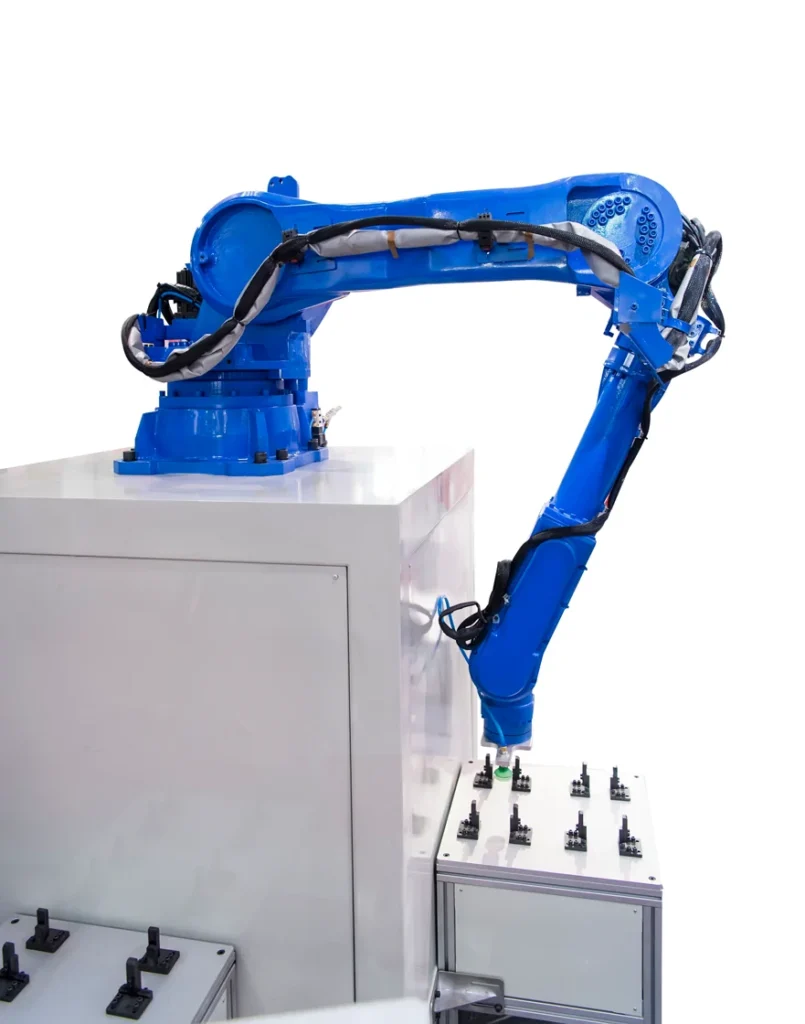
Robotics and automation
End-effector brackets, actuator mounts and guided fixtures need clearance throughout travel. Share mating models and identify which mounting faces locate the mechanism.
Electronics enclosures
Locate board mounts, connector cutouts and sensor openings in one datum system. Flag heat paths, grounding surfaces and gasket features before specifying a finish.
Inspection and test equipment
Fixture locators, adapter plates and setup tools should support repeatable positioning. Define the reference geometry and how the gauge or sample will be checked.
Industrial equipment
Housings, spacers and wear components need clear assembly references. State service temperature, impact or corrosion exposure and whether individual parts will be replaced.
Product development
A concept build may test an envelope or hand access. A functional build needs the material, finish and interfaces that determine the result. Record the sample model and test conditions.
Fabricated equipment panels
Formed covers and control panels can depend on bends, hardware and the finished opening. Check assembled fit to a frame after coating when clearances are tight.
Plan approval for the intended use
Choose evidence that answers the project question and can be traced to the sample.
Assembly fit
Provide the mating part or the relevant interface geometry. Record interference, fastener access and the order in which the parts go together.
Functional testing
Define loads, direction, duration, temperature and environment. Identify which materials or finishes must match production for the result to apply.
Dimensional verification
Mark the controlling drawing features and how they will be measured. Retain the datum setup, inspection condition and sample identifier.
Tell us where the part will be used
Include the interface, working environment, critical dimensions and checks that drive acceptance.